
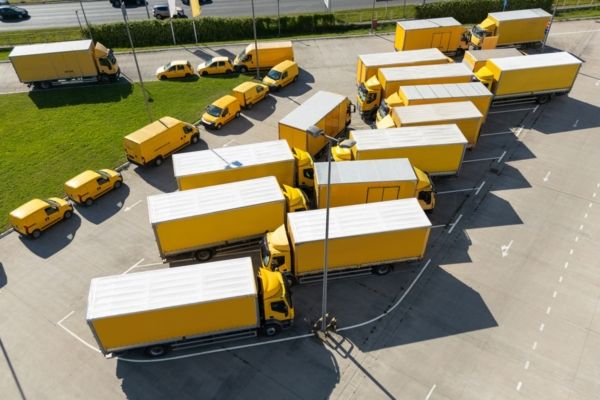
Choosing the right fleet fuel card can involve evaluating industry-specific operational needs and matching them to program features. Different industries may have requirements based on geographic coverage, vehicle types, operational patterns and management priorities. Construction fleets may need fleet cards with capabilities different from those required by delivery services, and long-haul trucking operations often have different requirements than local service businesses. An effective fleet card selection process starts with understanding industry-specific needs and evaluating programs based on how well they address those requirements. Exxon Mobil fleet cards serve diverse industries with programs designed to meet varying operational needs while helping to provide access to nearly 12,000 Exxon and Mobil branded stations nationwide.
Explore Exxon Mobil BusinessProTM program for service and delivery fleets.
After identifying industry-specific requirements, businesses should evaluate fuel card programs based on how well features align with operational needs.
Construction and Equipment-Intensive Industries
Construction fleets typically operate diverse equipment, including trucks, vans and heavy equipment, all of which may fuel at different locations and have different fueling needs. These are often used at varying locations and require flexible fuel card programs to accommodate job-site changes. Construction businesses can benefit when cards support both diesel and gasoline purchases, offer broad geographic coverage and provide detailed reporting. The U.S. Energy Information Administration notes that diesel fuel powers most of the farm and construction equipment in the United States1. Purchase controls, which can be set to allow maintenance expenses, non-fuel purchases such as maintenance, parts and service, can help construction businesses consolidate equipment-related costs onto a single payment platform.
Considerations: These types of fleets should prioritize programs offering flexibility and comprehensive expense tracking capabilities.
Delivery and Distribution Services
Delivery fleets typically operate on defined routes with predictable fueling patterns, making network coverage in service territories particularly important. These businesses can benefit from programs offering competitive pricing at convenient station locations along established routes. Delivery operations often use multiple vehicle types, from small vans to larger trucks, and require fuel card programs to accommodate this diversity. GPS vehicle tracking linked to a BusinessPro card can help improve route efficiency, while driver-level reporting can support performance management. Driving behavior is one factor: the U.S. Department of Energy and the U.S. Environmental Protection Agency estimate that aggressive driving can lower gas mileage by roughly 15% to 30% at highway speeds and 10% to 40% in stop-and-go traffic2.
Considerations: Delivery businesses should focus on programs with strong network coverage in their operational areas and reporting tools for route optimization.
Service and Maintenance Businesses
Service fleets, including plumbers, electricians and HVAC technicians, typically operate within regional service territories, with vehicles returning to base daily. These businesses can benefit from fuel card programs offering strong coverage in specific geographic areas rather than requiring nationwide access. Service businesses often have smaller fleets and appreciate programs designed for small to mid-size operations without enterprise-level complexity. Fleet managers can set purchase restrictions by product type, such as diesel-only or gas-only, to limit cards to fuel only, helping prevent unauthorized spending.
Considerations: Service businesses should prioritize ease of use, regional network coverage and reporting features matching their operational needs.
Long-Haul Trucking and Transportation
Long-haul trucking businesses typically require extensive geographic coverage across multiple states or even nationwide access to fuel stations. These operations typically fuel at highway truck stops rather than local stations, making network composition important. Trucking businesses can benefit from diesel-only programs offering volume discounts or fuel rebates. Fuel is a substantial share of long-haul operating cost: the American Transportation Research Institute reported an industry-average cost to operate a truck of $2.336 per mile in 2025, or $1.854 per mile excluding fuel3. Such programs typically scale with high fuel consumption, meaning higher monthly fuel volumes may qualify for a larger per-gallon rebate, subject to program terms.
Exxon Mobil BusinessPro program, for example, publishes rebate tiers that increase with monthly fuel volume, up to 6¢ per gallon at participating Exxon- and Mobil-branded stations; rebates are earned when balances are paid on time and are subject to change. Comprehensive reporting, including IFTA support, can help simplify regulatory compliance. The International Fuel Tax Agreement applies to qualified motor vehicles, defined as those with a gross vehicle weight over 26,000 pounds or three or more axles regardless of weight, licensed through a single base jurisdiction.5
Considerations: Long-haul fleets should focus on programs with broad coverage across the highway network, volume-based savings opportunities and trucking-specific features such as IFTA reporting.
Government and Municipal Fleets
Government fleets usually have specific procurement requirements and compliance obligations influencing fuel card selection. These operations may require specific contract structures, compliance with competitive bidding requirements, or reporting formats for audit purposes. Government fleets can benefit from programs offering established government contracts, detailed transaction records for compliance documentation, and vendor stability. Federal fleets are one example: under Federal Acquisition Regulation 13.301, agencies are authorized to use the GSA Fleet Card for the purchase of fuel, maintenance, and repair of government-owned and operated motor vehicles.5
Considerations: These operations should prioritize programs that use government-friendly contracting, maintain comprehensive audit trails and support public-sector procurement requirements.
Healthcare and Emergency Services

Healthcare fleets, including ambulances and home health services, may require reliable access to fuel at all hours. Emergency service vehicles often rely on cards designed for consistent acceptance, with flexible geographic options or time settings. Healthcare businesses can benefit from programs offering responsive customer support, broad network coverage and reliable card performance.
Considerations: Healthcare fleets should focus on program reliability, support availability and network coverage to help ensure vehicles can fuel when needed.
Exxon Mobil BusinessPro fleet cards serve diverse industries with programs designed to address varying requirements while helping to provide broad network coverage.
Landscaping and Outdoor Service Businesses
Landscaping fleets operate a variety of vehicles and equipment, including trucks, trailers and small power equipment. These operations also often experience seasonal demand variations, which can call for flexible card programs to accommodate changing activity levels. Landscaping businesses can benefit from programs supporting both vehicle and equipment fueling. These businesses also can benefit from purchase controls with settings that help prevent unauthorized purchases, such as daily or weekly spending limits per card or driver and driver ID prompts at the pump.
Considerations: Seasonal businesses should prioritize programs with flexible card activation and deactivation, diverse fuel options and spending controls appropriate for seasonal operations.
Food Service and Restaurant Delivery
Food delivery fleets can benefit from fuel card programs capable of supporting high-frequency, small-transaction patterns. These operations often use smaller vehicles with efficient fuel consumption operating within defined delivery zones. Restaurant businesses can benefit from programs with convenient urban station locations, minimal transaction fees and reporting supporting cost allocation by location or delivery zone.
Considerations: Food service fleets should focus on programs with strong coverage in urban and suburban areas, fee structures suited to smaller transactions, and reporting that supports multi-location operations.
Evaluating Program Features Against Industry Needs
After identifying industry-specific requirements, businesses should evaluate fuel card programs based on how well features align with operational needs. Key considerations include network coverage in operational areas, fee structures matching transaction patterns, reporting capabilities appropriate to the business, purchase control features for risk management, and support services to address industry-specific challenges.
Visit exxonmobilfleetcards.com to learn more.
2. U.S. Department of Energy and U.S. Environmental Protection Agency, “Driving More Efficiently,” FuelEconomy.gov, https://www.fueleconomy.gov/feg/driveHabits.jsp (accessed 21 August 2026).
3. American Transportation Research Institute, “An Analysis of the Operational Costs of Trucking: 2026 Update,” July 2026, https://truckingresearch.org/about-atri/atri-research/operational-costs-of-trucking/ (accessed 21 August 2026).
4. International Fuel Tax Agreement, Articles of Agreement, Article II (R212, R245), as published by the Colorado Department of Revenue, “IFTA Definitions Glossary,” https://tax.colorado.gov/IFTA-definitions (accessed 21 August 2026).
5. U.S. General Services Administration, “GSA Fleet Card,” https://www.gsa.gov/buy-through-us/products-and-services/transportation-and-logistics-services/fleet-management/vehicle-leasing/gsa-fleet-card (accessed 21 August 2026).
